Performance
Concerts & Conversations: Give Me Liberty, Give Me Song: America’s Journey at 250
April 25
Piano Performance Museum
About the performance
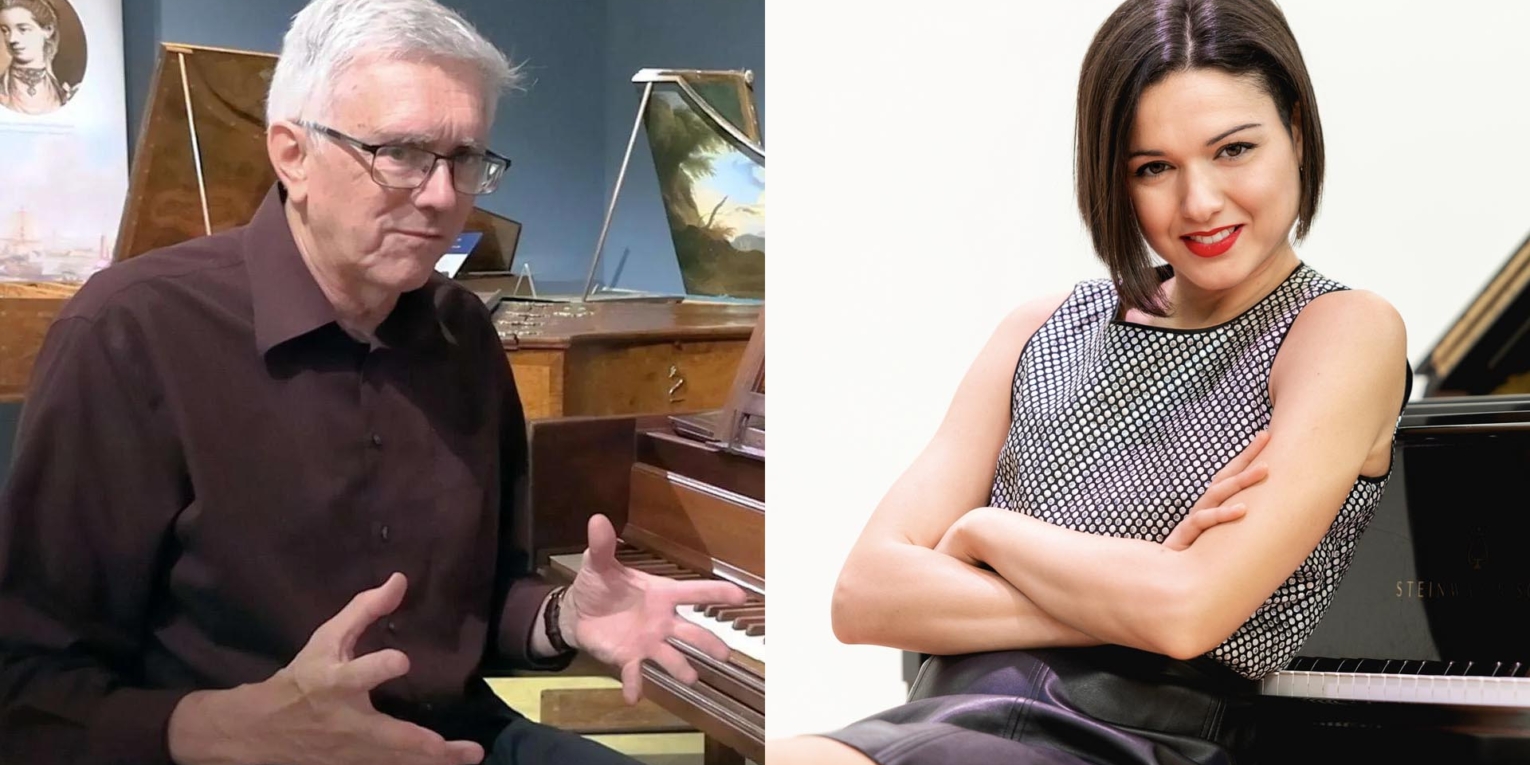
Patricia Garcia-Gil, Fortepiano
Tom Strange, Lecture
This program hears the parlor piano—the era’s badge of refinement and wealth—as both platform and boundary for women in the newly founded United States, where social codes demanded taste, modesty, and brevity—music meant to charm rather than dazzle. Among the earliest documented women writing for piano is Elizabeth J. C. von Hagen, active in Boston and New York, followed by Marthesie Demilliere. Yet many scores appeared under veiled attributions—“A Lady,” “A Young Lady”–– and publication often relied on patriotic framing until later in the century, when composers such as Augusta Browne and Faustina H. Hodges gained recognition. Meanwhile, in Santiago de Chile, Isidora Zegers animated trans-American connections, hosting visitors such as Louis Moreau Gottschalk, and Teresa Carreño emigrated to New York, performed for President Lincoln, and published her first waltz in Boston—bridging the Americas and linking parlor culture to a rising public virtuosity.
Pay What You Can